Why We Overspend Emotionally and How to Change
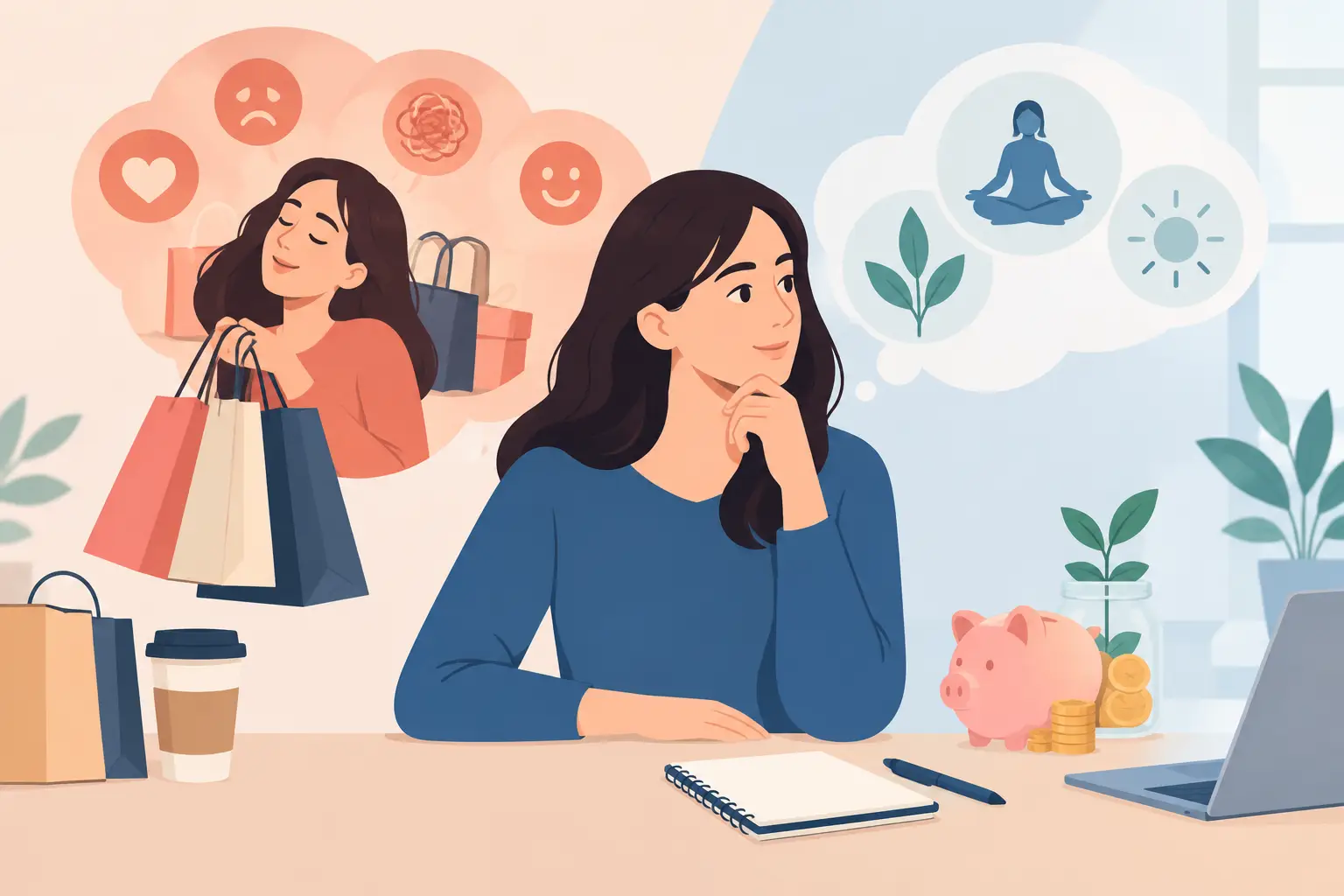
A package arrives after a difficult week, and for a moment, everything feels lighter. The purchase may be small, or it may be far beyond what you planned to spend. Either way, the relief is real. So is the regret that often follows. Understanding why we overspend emotionally begins here: spending is rarely only about the item in your cart. It can be an attempt to soothe, celebrate, belong, prove something, or create a version of yourself that feels more secure.
That does not mean you are irresponsible or incapable of managing money. It means you are human. Money decisions are often emotional decisions wearing a practical disguise. A budget can show you where your money went, but self-awareness helps you understand why it felt necessary to spend it in the first place.
Why We Overspend Emotionally
Emotional overspending happens when the feeling you want to change matters more, in that moment, than the financial choice you intended to make. You might buy because you are lonely, anxious, bored, underappreciated, or exhausted from making decisions all day. You might also spend when you are happy - treating a promotion, a milestone, or simply a Friday night as evidence that you deserve more.
The purchase is not always the problem. Pleasure, generosity, and celebration belong in a healthy financial life. The issue is whether spending is your only reliable way to regulate an emotion, and whether it repeatedly conflicts with what you say matters to you.
Emotional spending often has a fast rhythm: trigger, urge, purchase, temporary relief, second thoughts. The speed is significant. When there is little space between feeling and action, your present self gets to make a decision that your future self must absorb.
Spending can become emotional first aid
For many people, buying something creates an immediate sense of control. When work feels uncertain, relationships feel strained, or the news feels relentless, choosing a product, a meal, or an experience can feel like a clear win. You can have it now. You can decide. You can change how you feel for a few minutes.
But emotional first aid is not the same as emotional care. A purchase may soften the feeling without addressing it. If the underlying stress remains, the urge returns - often with more urgency and less available money.
Your money story may be driving the purchase
Each of us develops beliefs about money long before we begin earning it. Perhaps money was scarce and treats felt rare, so saying no to yourself now feels like deprivation. Perhaps achievement was rewarded with gifts, making spending feel like proof that your hard work counts. Or perhaps status and appearance were tied to safety, acceptance, or respect.
These beliefs are not character flaws. They are learned adaptations. Yet a story that once made sense can become expensive when it runs automatically. Someone whose story says, "I have to enjoy money while I have it," may struggle to save even with a stable income. Someone whose story says, "People will see I am successful," may feel pressure to spend visibly, even while privately anxious.
The Archetype Beneath the Habit
At The Money Story, we view financial behavior as an expression of deeper patterns, not a collection of isolated mistakes. Your spending habit may be shaped by an archetype - a recurring way you seek safety, freedom, validation, control, or connection through money.
For example, a freedom-seeking pattern may resist limits because a budget feels restrictive. The person is not necessarily careless; they may associate financial structure with losing autonomy. A validation-seeking pattern may spend to feel worthy or to keep pace with peers. A security-driven pattern can overspend too, particularly when buying preparedness, upgrades, or reassurance feels like protection against uncertainty.
The same purchase can mean different things to different people. A new wardrobe could reflect creativity for one person, belonging for another, and a response to insecurity for someone else. That is why generic advice such as "just stop buying coffee" so often fails. It targets the behavior while missing the emotional job the behavior is doing.
Ask yourself: What am I hoping this purchase will change about how I feel? The answer may be more useful than the price tag.
How to Catch the Pattern Before Checkout
You do not need to remove all spontaneity from your life. The goal is to create enough awareness that you can choose, rather than react. Start by noticing your most common spending moments. Is it late at night? After tense meetings? When you scroll social media? On the days you feel you have been especially disciplined?
Then name the trigger in plain language. Instead of saying, "I am bad with money," try, "I want to shop when I feel invisible," or "I order takeout when I am too depleted to make another decision." Specific language replaces shame with useful information.
Build a pause that fits real life
A pause works best when it is simple enough to use while you are emotional. For nonessential purchases above an amount you choose, wait 24 hours. For larger purchases, make it 72 hours or a week. Put the item on a list, close the tab, and return after the feeling has settled.
During that pause, ask three questions: Do I still want this when I am calm? What feeling is present right now? Is there another way to meet that need? If you are seeking comfort, a walk, a call with a friend, rest, or a familiar meal at home may serve you better. If you are seeking recognition, consider acknowledging the accomplishment directly instead of turning it into a transaction.
This is not about denying yourself. Sometimes you will wait and decide the purchase is still meaningful, useful, and affordable. That is a win. Intentional spending includes room for joy because it is aligned with your values, not because it briefly silences discomfort.
Give pleasure a place in your plan
Strict deprivation can make emotional overspending more likely. When every discretionary purchase is framed as failure, the eventual rebound tends to be larger. A realistic spending plan includes a defined amount for enjoyment, convenience, and small luxuries.
The right amount depends on your income, obligations, goals, and current financial margin. If debt repayment or an emergency fund is urgent, your discretionary range may need to be modest for a season. That is not punishment. It is a conscious trade-off that protects the future you are trying to build.
When you plan for pleasure, you also get to practice a powerful distinction: "I can afford this" is not always the same as "I want to spend on this." The first is about capacity. The second is about priorities.
Replace the Script, Not Just the Purchase
Lasting change comes from developing a new response to the emotional moment. If your old script is, "I had a hard day, so I need to buy something," a more supportive script might be, "I had a hard day, so I need care. I will decide tomorrow whether buying this is part of that care."
If your script is, "Everyone else has this, so I am behind," try, "Someone else's choices do not define my progress." These statements may feel awkward initially because they interrupt a familiar pattern. Repetition gives them credibility.
It also helps to make your goals emotionally vivid. Saving for an emergency fund can sound abstract until you connect it to the feeling it creates: the ability to leave a harmful job, handle a car repair without panic, or support yourself through a transition. Saving is not merely withholding. It is an act of choosing future options.
Track emotional patterns alongside transactions for two weeks. A brief note is enough: what you bought, what you felt before, and how you felt afterward. Look for patterns with curiosity, not prosecution. You may find that certain stores, apps, people, or times of day reliably weaken your ability to choose freely.
You are not required to earn self-control through guilt. The next time the urge to spend arrives, let it tell you something before you let it take over. A pause, an honest question, and one choice that honors both your present needs and your future self can begin to rewrite the story.